
Student - Thesis 2019


Photos by: Gabino Perez/USMC, Amanda Green, Crag Rats
I interviewed seven search and rescue professionals across multiple organizations, from high-angle rescue teams to K9 units to volunteer pilots. A few things came up again and again. Helicopters usually aren't dispatched until a subject's location is already confirmed, and weather at takeoff can ground them entirely. Even where drones are already in use, tree cover defeats visual search almost as often for a drone as it does for a helicopter crew with night vision. What teams actually wanted wasn't a better camera, it was a way to get supplies, splints, and medical gear to a subject before a second team or helicopter ever had to be called.


The skilled teams needed for these rescue operations frequently live several hours away leading to long response times, Photo by: Air Force


Fixed-wing flight is the most efficient form of air travel, especially when paired with electric power


The goal for the airframe was to create negative space behind the nose for modular payload options
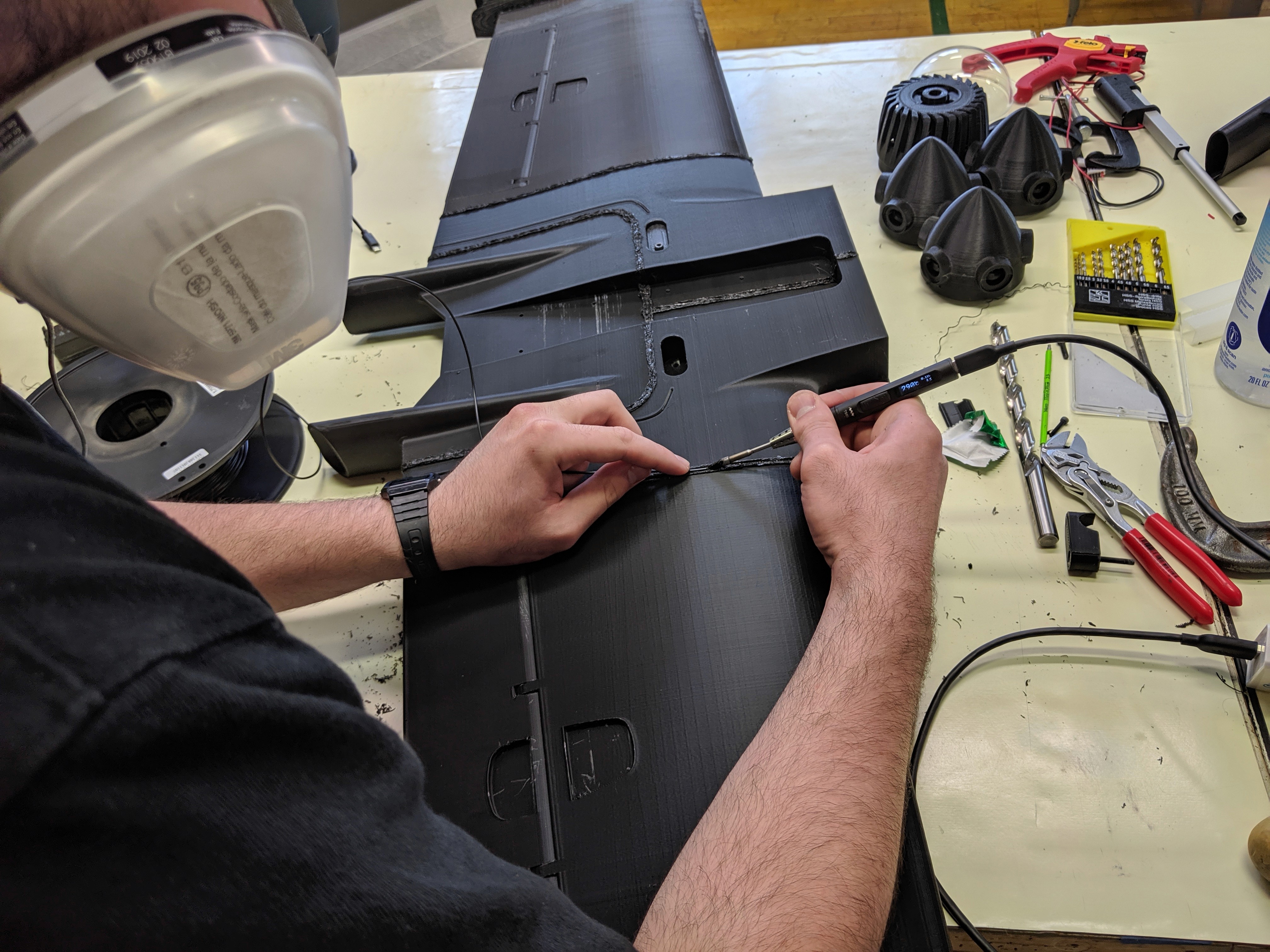

For increased strength, I welded the PLA pieces together using a temperature-controlled soldering iron

The wingspan including propellers is around six feet


For the final model, I integrated the stand into the payload, so it simply slides onto the rails for display


For vision, the front of the aircraft has a single main camera, along with two spotlights for night operations


Boston, MA