Shark SilkiPro

Shark SilkiPro

SharkNinja · Lead Designer 2025-2026

SilkiPro dries and straightens hair in a single pass, using hot air and heated plates together, with a dedicated wet mode that lowers plate temperature to make styling safe on wet hair. The brief called for something that would appeal broadly, from Gen Z to Gen X, and feel clean, modern, and powerful, instantly reading as more than a standard straightener.

SilkiPro dries and straightens hair in a single pass, using hot air and heated plates together, with a dedicated wet mode that lowers plate temperature to make styling safe on wet hair. The brief called for something that would appeal broadly, from Gen Z to Gen X, and feel clean, modern, and powerful, instantly reading as more than a standard straightener.

Trend-driven enthusiast, practical everyday user, professional stylist

SilkiPro had to work for three very different people: a trend-driven Gen Z chasing frequent styles without sacrificing heat damage, a practical minimalist across a wide age range who just wants one low-maintenance tool that delivers, and a professional stylist who expects salon-level precision and durability. Designing for all three meant the product couldn't lean too far toward any single identity. To pin that down, the team worked from four identity pillars: approachable, professional, specialist, and lust-worthy. Just as useful were the explicit boundaries of what to avoid, nothing intimidating, overly complicated, gimmicky, or commodity.

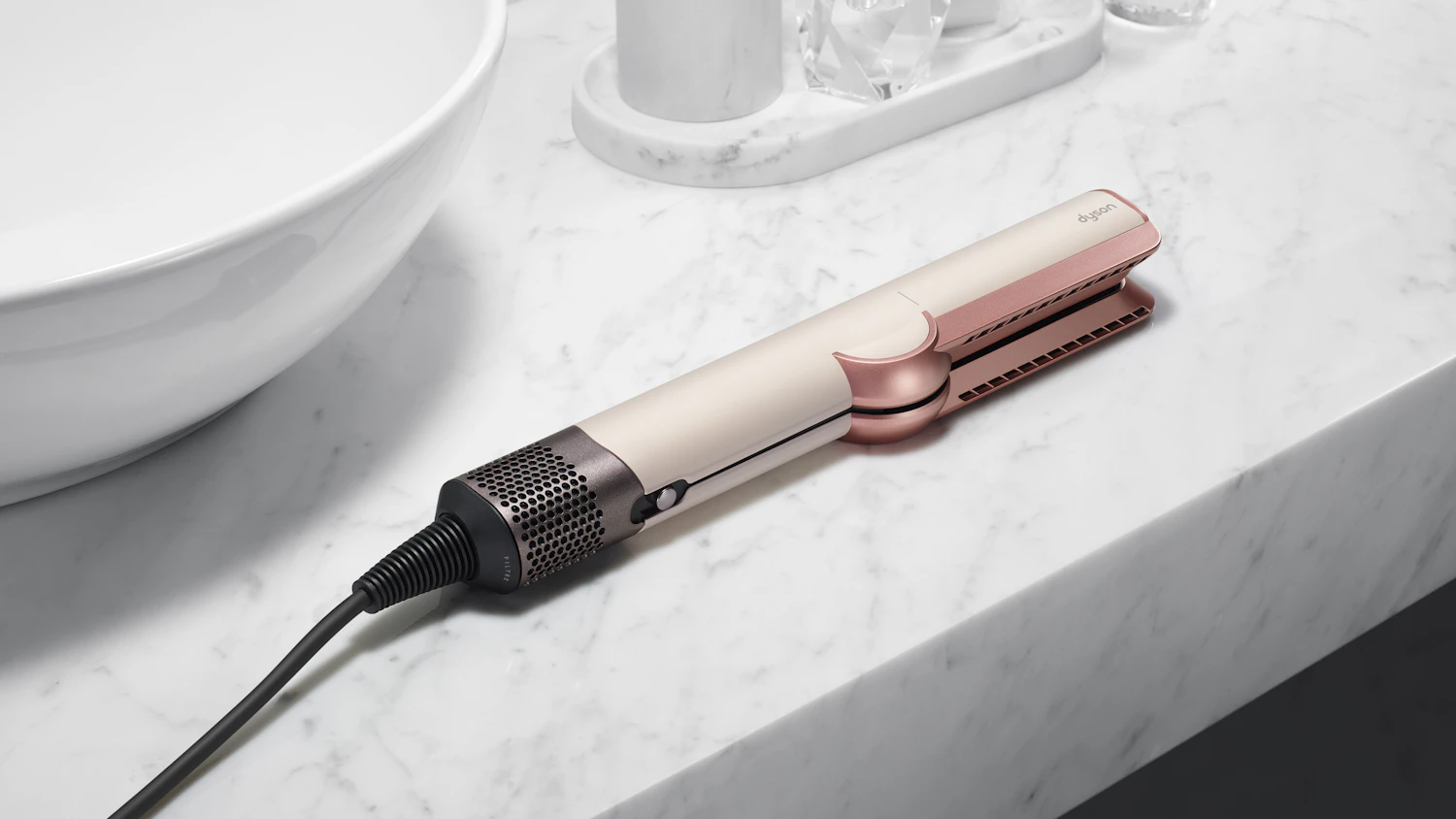
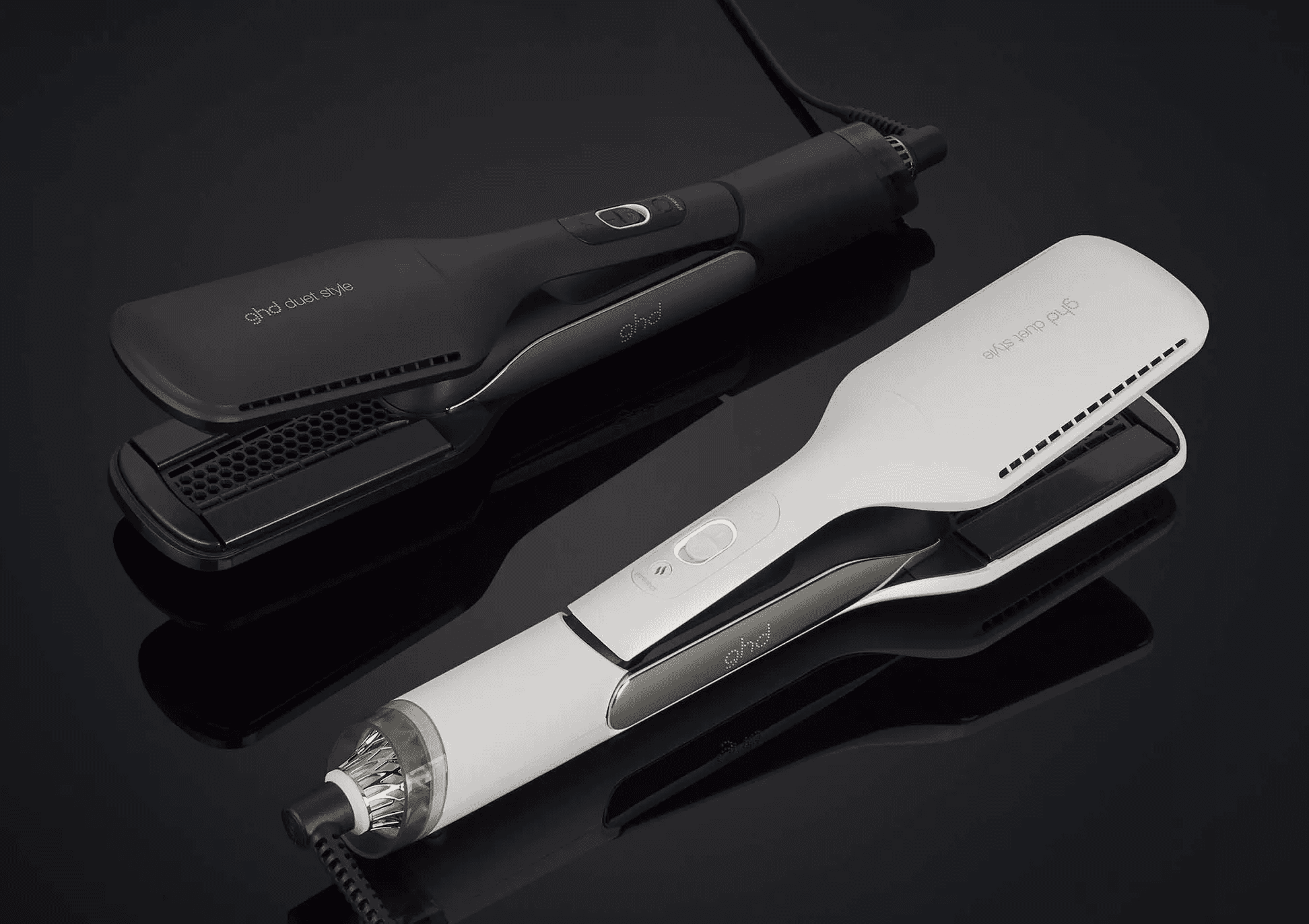
Dyson Airstraight and GHD Duet Style

The competitive landscape made the opportunity clear. Dyson’s AirStraight lacks heated plates and is unable to fully straighten coarser hair types with lasting style retention. GHD’s Duet Style has heated plates but no high-speed BLDC motor, limiting rapid multi-pass drying. SilkiPro was designed to close both gaps, at a lower price.

The competitive landscape made the opportunity clear. Dyson’s AirStraight lacks heated plates and is unable to fully straighten coarser hair types with lasting style retention. GHD’s Duet Style has heated plates but no high-speed BLDC motor, limiting rapid multi-pass drying. SilkiPro was designed to close both gaps, at a lower price.

You can see P1's central outlet in the first image. The hair dryer functionality pushed the handle thicker than we wanted from an ergonomic standpoint

The original plan for P1 was to use the central outlet, shown above, to add hairdryer functionality whenever the straightener arm was locked closed. Performance testing showed the airpath was too much of a compromise to hit reasonable dry times. The central duct and hairdryer KPI also forced the handle to be bulkier than users wanted, and existing IP limited how a centralized-airflow mechanism could be built. This build gave clear direction for the redesign: focus the next prototypes on an uncompromised straightening experience.

The original plan for P1 was to use the central outlet, shown above, to add hairdryer functionality whenever the straightener arm was locked closed. Performance testing showed the airpath was too much of a compromise to hit reasonable dry times. The central duct and hairdryer KPI also forced the handle to be bulkier than users wanted, and existing IP limited how a centralized-airflow mechanism could be built. This build gave clear direction for the redesign: focus the next prototypes on an uncompromised straightening experience.

P2 started from zero with the full architecture change and asymmetric outlet

P2 shifted the focus to duct physics, tuning angle and geometry to maximize mechanical water removal rather than relying on heat alone. The product's goal was now clear: take hair from wet all the way to straight with a single tool, skipping the time-consuming step of drying completely before styling. Leadership was firm that this tool couldn't resemble a traditional straightener, it needed to clearly tell consumers that SilkiPro was something more. That pushed us to explore several accent panel designs to accentuate the asymmetric airflow duct and highlight the technology story.

P2 shifted the focus to duct physics, tuning angle and geometry to maximize mechanical water removal rather than relying on heat alone. The product's goal was now clear: take hair from wet all the way to straight with a single tool, skipping the time-consuming step of drying completely before styling. Leadership was firm that this tool couldn't resemble a traditional straightener, it needed to clearly tell consumers that SilkiPro was something more. That pushed us to explore several accent panel designs to accentuate the asymmetric airflow duct and highlight the technology story.

Form studies were critical to validating the ergonomic implications of each design direction, the P2 appearance model shown here highlights the accented panel treatment

To validate ergonomics before committing to tooling, I built a series of articulating models with working hinges and adjustable jaw angles, letting the PD team physically test grip and opening range across a variety of hand sizes. Their feedback directly shaped the final handle diameter and hinge geometry, catching ergonomic issues early enough to resolve them well before the design locked.

To validate ergonomics before committing to tooling, I built a series of articulating models with working hinges and adjustable jaw angles, letting the PD team physically test grip and opening range across a variety of hand sizes. Their feedback directly shaped the final handle diameter and hinge geometry, catching ergonomic issues early enough to resolve them well before the design locked.

Comb slot, silicone tension lip, golden dished directionality accents added to the design

TRA / P3 added a slot for interchangeable combs and a silicone tension lip to modulate grip on the hair, while the accent panel was refined into a distinctive dished gesture that calls out the airflow side of the product. The zone around the heated plates and airflow outlet had to be PPS plastic, the only material heat-resistant enough for the job, but limited in color range and naturally rough in texture. Working with ME, we developed a seamless transition from that zone into the UI housing and arm-lock switch, so the material constraint disappeared into the gesture rather than reading as a compromise.

TRA / P3 added a slot for interchangeable combs and a silicone tension lip to modulate grip on the hair, while the accent panel was refined into a distinctive dished gesture that calls out the airflow side of the product. The zone around the heated plates and airflow outlet had to be PPS plastic, the only material heat-resistant enough for the job, but limited in color range and naturally rough in texture. Working with ME, we developed a seamless transition from that zone into the UI housing and arm-lock switch, so the material constraint disappeared into the gesture rather than reading as a compromise.

On the assembly line reviewing production samples for EB1, right image shows aerogel insulation above the heated plates

During the first engineering build made with tooled parts, I traveled to the factory in China to review part fit, execution, and CMF for SilkiPro. I owned design end to end from P1 through mass production, with a design director overseeing multiple categories and additional designers rotating in for short stretches when needed. Layer's design team worked on several concepts pre-P1 that were parked early on, then brought back for CMF input after EB1. Primary design, however, was developed through an in-house effort.

During the first engineering build made with tooled parts, I traveled to the factory in China to review part fit, execution, and CMF for SilkiPro. I owned design end to end from P1 through mass production, with a design director overseeing multiple categories and additional designers rotating in for short stretches when needed. Layer's design team worked on several concepts pre-P1 that were parked early on, then brought back for CMF input after EB1. Primary design, however, was developed through an in-house effort.

For curly-hair users, pre-stretching is an essential step toward straight results, integrating the comb lets that stretching happen in the same pass as drying, rather than as a separate step

SilkiPro Straight launched in the US on February 17, 2026 at $249.99, first direct-to-consumer and on Amazon, with a pre-launch waitlist that reportedly reached 10,000 people. Retail expanded quickly to Ulta and Sephora. It launched in the UK on March 4, 2026 at £249.99, later reaching Sephora's European and Latin American markets as well.


SilkiPro Straight launched in the US on February 17, 2026 at $249.99, first direct-to-consumer and on Amazon, with a pre-launch waitlist that reportedly reached 10,000 people. Retail expanded quickly to Ulta and Sephora. It launched in the UK on March 4, 2026 at £249.99, later reaching Sephora's European and Latin American markets as well.

Final product with accessories, end style results

Final product with accessories, end style results

Boston, MA

© 2026 Kevin Kelemen

© 2026 Kevin Kelemen